Engaging with Policy: Cambridge Policy Hackathon

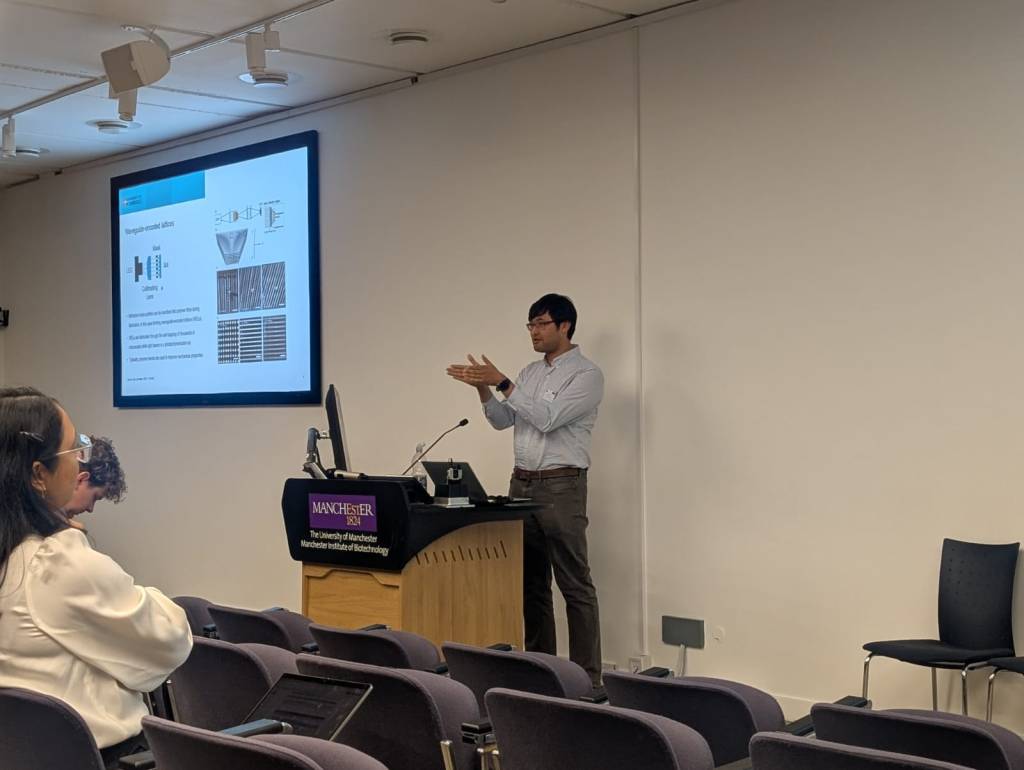
Tom recently participated in the first Cambridge Policy Hackathon, organised by the Digital Policy Innovation (DPI) network.  

The multidisciplinary event brought together students and professionals from all backgrounds to collaborate and showcase solutions to contemporary digital policy challenges. Over 48 hours, he contributed to a project hosted by the UK Department for Science, Innovation and Technology, exploring ways to better assess the demand for public sector datasets and connect them with those who use them to accelerate impact.  

The hackathon was an opportunity to learn about policy issues hands-on and engage with policy makers ahead of his upcoming POST fellowship, awarded as part of the UKRI policy internship scheme.  

New paper published in ACS Applied Optical Materials!

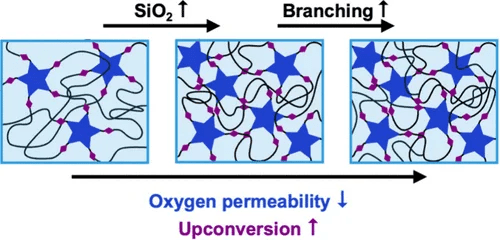
Congratulations to Georgie Burgoyne Morris, whose work on oxygen quenching of triplet-triplet annihilation upconversion (TTA-UC) in ureasil hosts was published in April in ACS Applied Optical Materials. 

This work, supported by Larissa Gomes Franca and former group member Abi Collins, explores how the structure of TTA-UC hosts impacts the ingress of oxygen, and how this interplays with the TTA-UC energy transfer processes to determine the overall performance. It hopes to set a precedent for the characterisation of oxygen permeability in TTA-UC hosts, and to inform the design of future host materials. 

You can read the paper here: https://doi.org/10.1021/acsaom.6c00025 

PAM group participates in Cambridge Festival 2026!

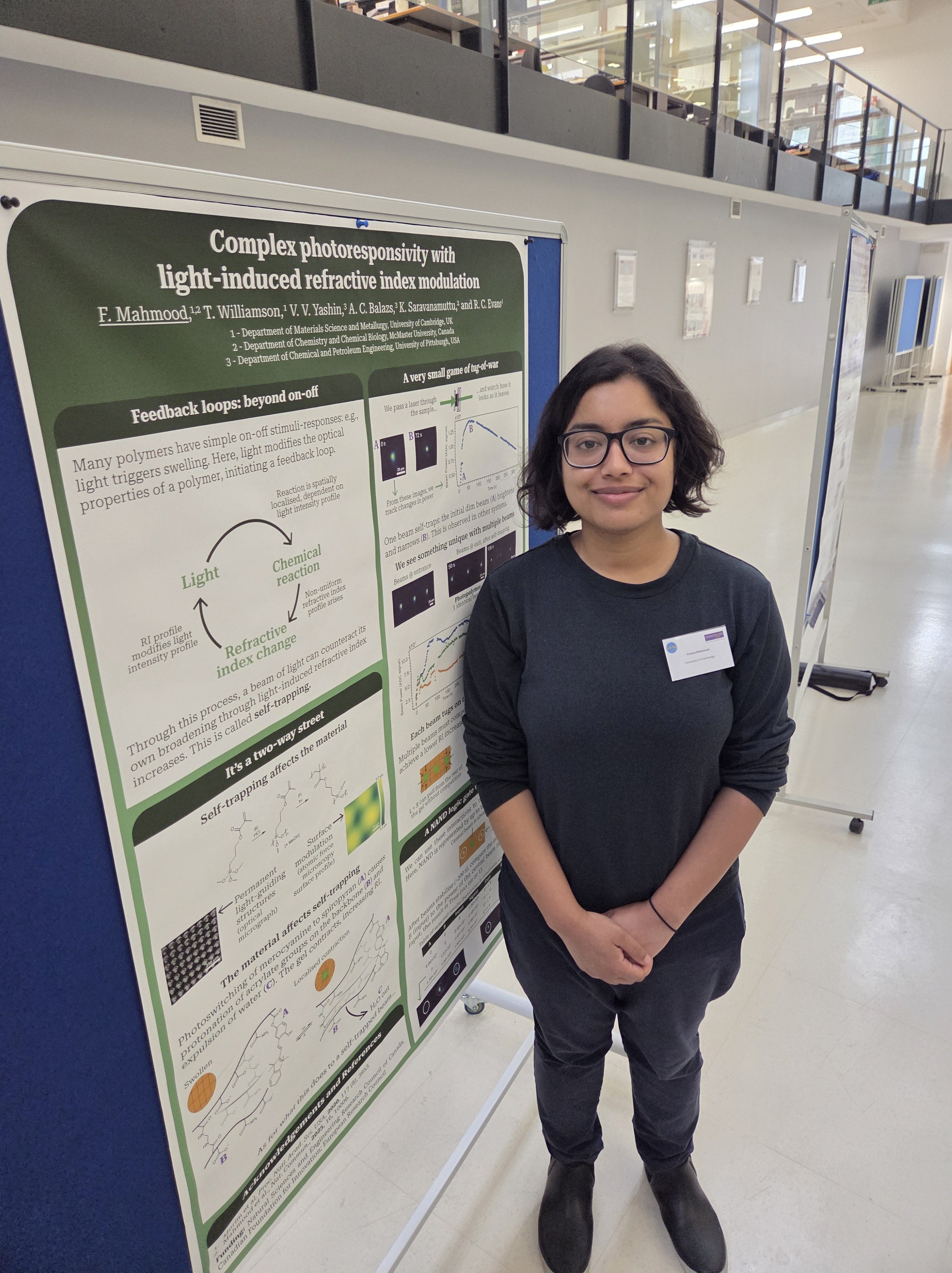
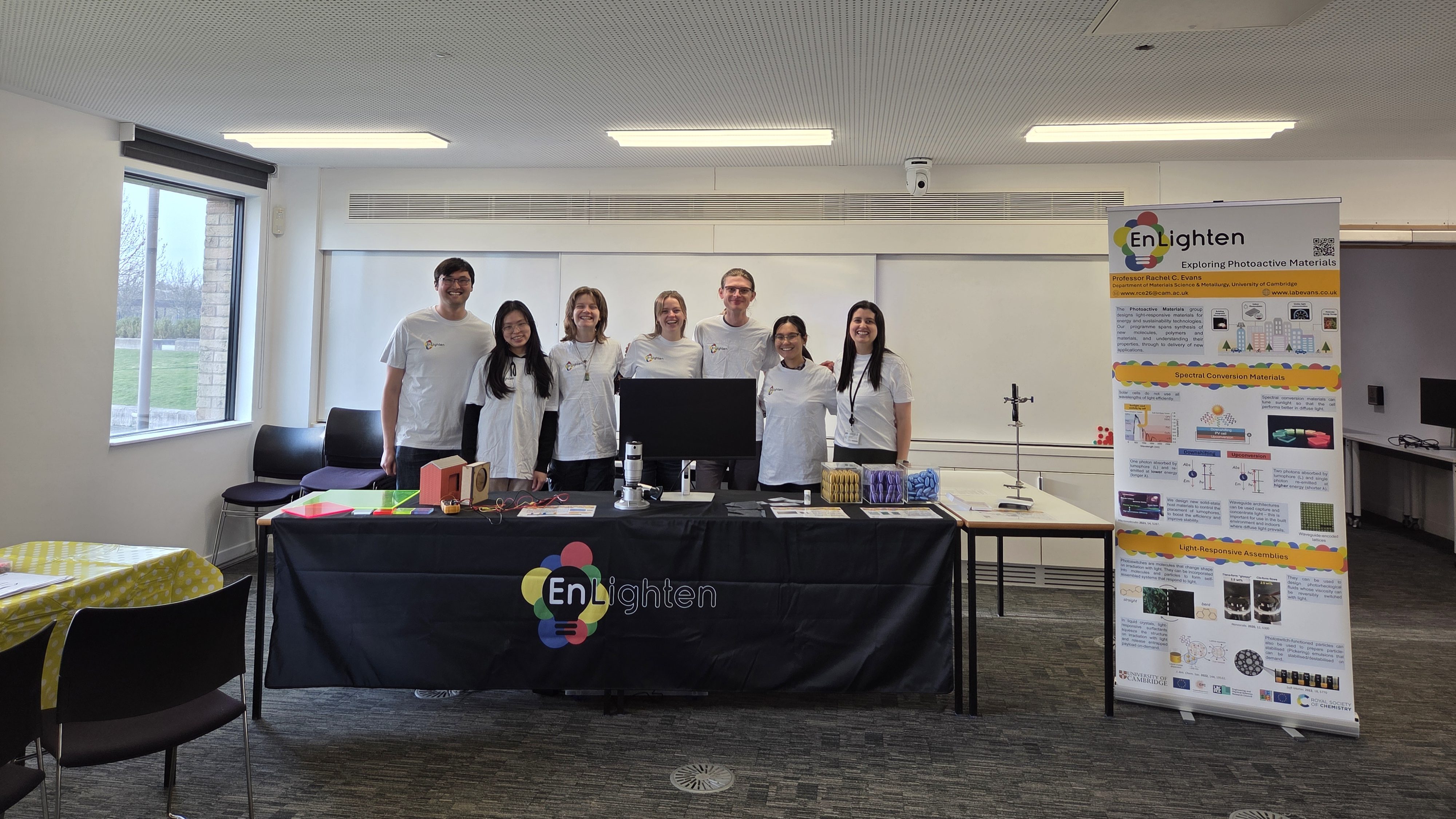
On Saturday 21st March, the Department of Materials Science & Metallurgy was buzzing with excitement as it once again opened its doors to the public for Cambridge Festival 2026. The PAM group was thrilled to be part of this fantastic event, welcoming visitors of all ages for a day packed full of hands‑on science and discovery.

We proudly showcased our outreach toolkit developed through the EnLighten project, giving the public the chance to get stuck into interactive demonstrations exploring liquid crystals and luminescent solar concentrators. The activities sparked curiosity, lively discussions, and plenty of enthusiasm, proof that materials science continues to captivate and inspire!

Huge congratulations and thanks go to Georgie and Bea, who led the EnLighten project and made this outreach possible, as well as to everyone who contributed their time and energy to make this year’s Festival such a successful and enjoyable experience. It was a wonderful day of sharing science with the wider community, and we’re already looking forward to the next one!

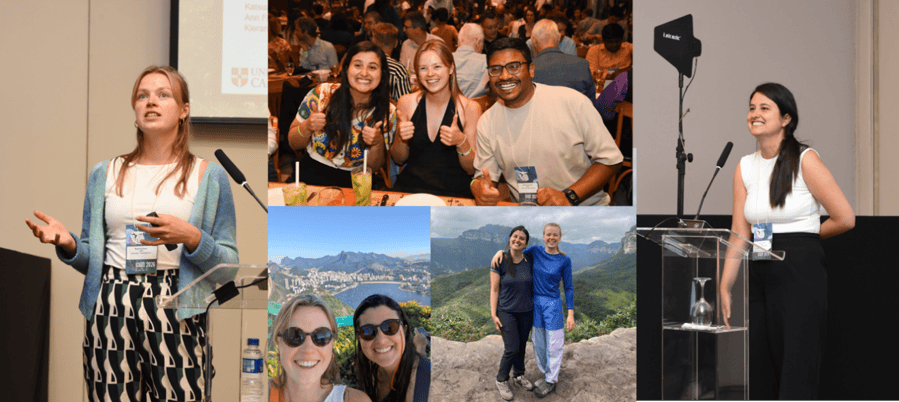
Celia’s visit down under

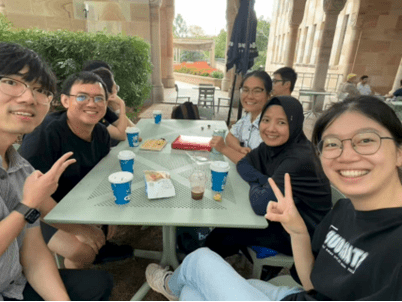
Celia ventured down for an insightful 6-month research exchange as a Research Visitor at the University of Queensland in Australia, supervised by Associate Professor Jingwei Hou. She had a productive period working on innovative approaches to process metal-organic framework glasses and their applications as a composite matrix to stabilise perovskite materials. Many thanks to the Hou research group for their warm welcome, fruitful conversations and collaborations!

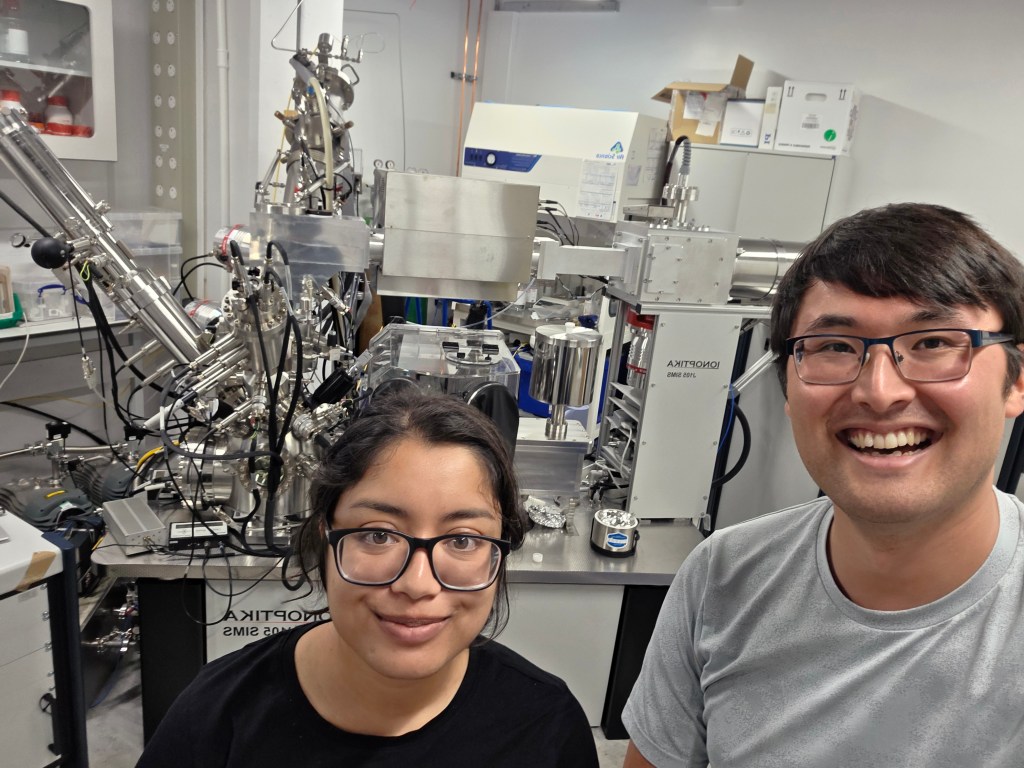
Takashi awarded EPSRC David Clarke Postdoctoral Fellowship

We are delighted to announce that Dr Takashi Lawson, has been awarded an EPSRC David Clarke Postdoctoral Fellowship, a highly prestigious and competitive award that supports outstanding early‑career researchers as they establish independence and develop into future research leaders.

The fellowship will support Takashi’s independent research programme within the PAM group, providing the opportunity to pursue ambitious, curiosity‑driven research while strengthening collaborations and contributing to our research environment. This award is a major achievement and a testament to the strength and originality of Takashi’s research vision.

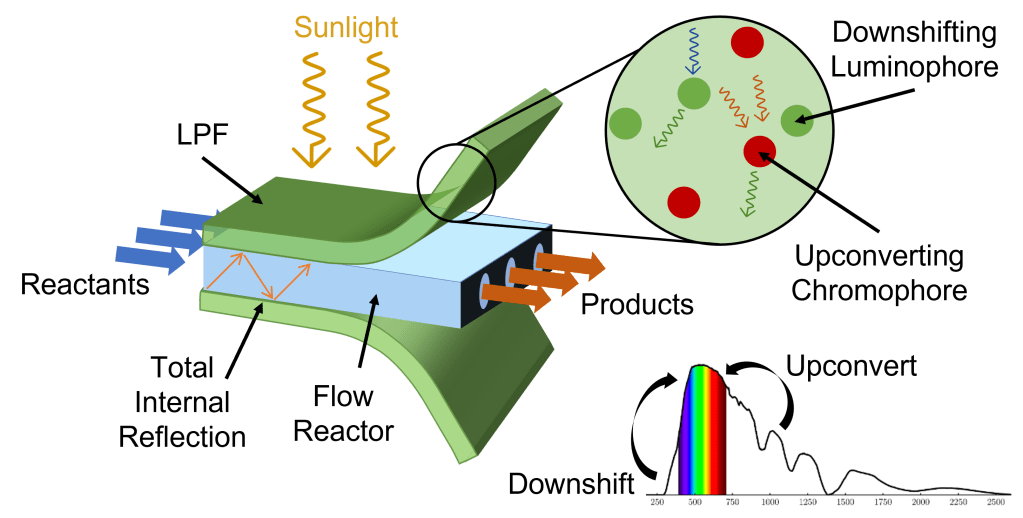
Takashi’s fellowship project, Luminescent Solar Microreactors for Photocatalysis, addresses a critical challenge in solar‑to‑chemical energy conversion: inefficient use of the solar spectrum by photocatalysts. The project will pioneer luminescent solar microreactors (LSMRs) that absorb sunlight and convert it into wavelengths better matched to photocatalytic processes through upconversion and downshifting of light. By identifying suitable light‑converting species and integrating them into polymer films, the research aims to significantly enhance photocatalytic efficiency and enable more effective solar fuel generation. This work has exciting potential to advance decentralised, low‑carbon chemical manufacturing and contribute to the transition to a net‑zero society.

Warm congratulations to Takashi on this fantastic achievement. We look forward to seeing the pioneering research outcomes that emerge from the fellowship and their continued contributions to the PAM group.