PAM group participates in Cambridge Festival 2026!

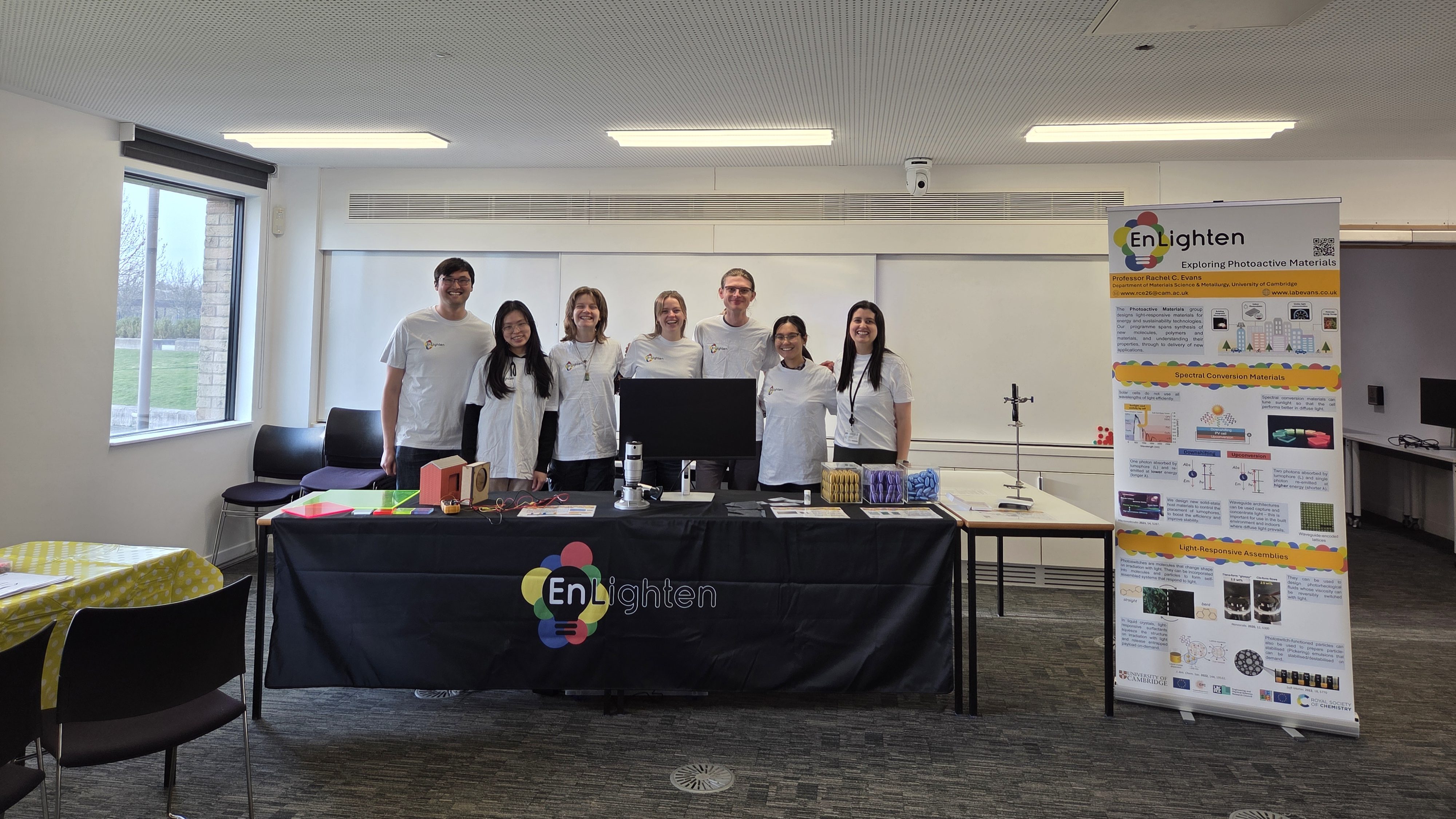
On Saturday 21st March, the Department of Materials Science & Metallurgy was buzzing with excitement as it once again opened its doors to the public for Cambridge Festival 2026. The PAM group was thrilled to be part of this fantastic event, welcoming visitors of all ages for a day packed full of hands‑on science and discovery.

We proudly showcased our outreach toolkit developed through the EnLighten project, giving the public the chance to get stuck into interactive demonstrations exploring liquid crystals and luminescent solar concentrators. The activities sparked curiosity, lively discussions, and plenty of enthusiasm, proof that materials science continues to captivate and inspire!

Huge congratulations and thanks go to Georgie and Bea, who led the EnLighten project and made this outreach possible, as well as to everyone who contributed their time and energy to make this year’s Festival such a successful and enjoyable experience. It was a wonderful day of sharing science with the wider community, and we’re already looking forward to the next one!

Takashi awarded EPSRC David Clarke Postdoctoral Fellowship

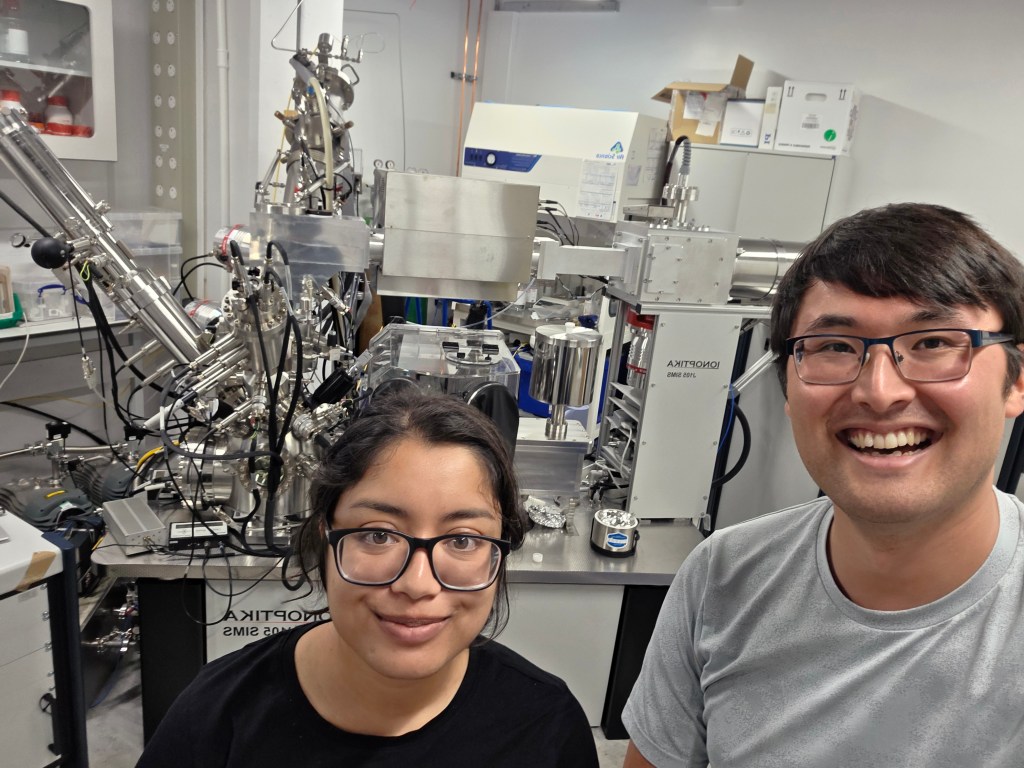
We are delighted to announce that Dr Takashi Lawson, has been awarded an EPSRC David Clarke Postdoctoral Fellowship, a highly prestigious and competitive award that supports outstanding early‑career researchers as they establish independence and develop into future research leaders.

The fellowship will support Takashi’s independent research programme within the PAM group, providing the opportunity to pursue ambitious, curiosity‑driven research while strengthening collaborations and contributing to our research environment. This award is a major achievement and a testament to the strength and originality of Takashi’s research vision.

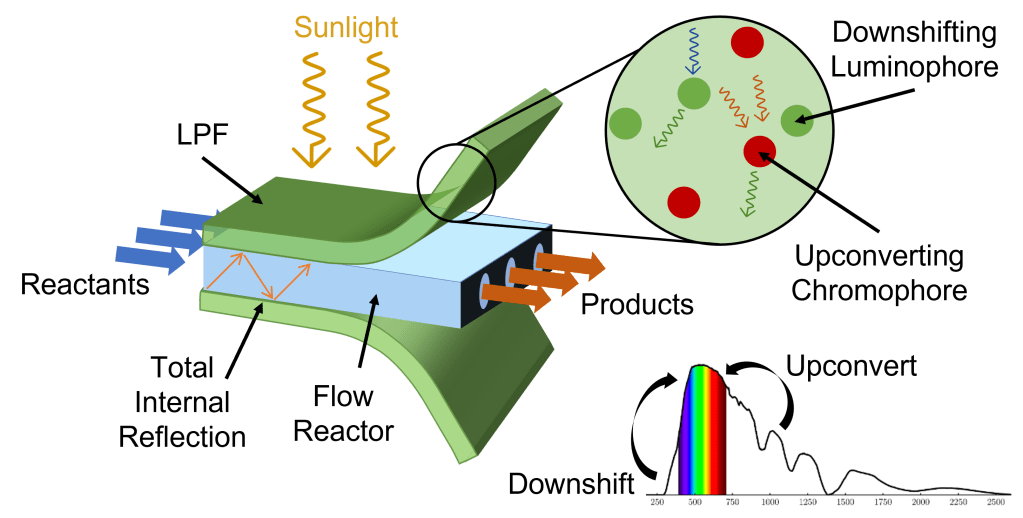
Takashi’s fellowship project, Luminescent Solar Microreactors for Photocatalysis, addresses a critical challenge in solar‑to‑chemical energy conversion: inefficient use of the solar spectrum by photocatalysts. The project will pioneer luminescent solar microreactors (LSMRs) that absorb sunlight and convert it into wavelengths better matched to photocatalytic processes through upconversion and downshifting of light. By identifying suitable light‑converting species and integrating them into polymer films, the research aims to significantly enhance photocatalytic efficiency and enable more effective solar fuel generation. This work has exciting potential to advance decentralised, low‑carbon chemical manufacturing and contribute to the transition to a net‑zero society.

Warm congratulations to Takashi on this fantastic achievement. We look forward to seeing the pioneering research outcomes that emerge from the fellowship and their continued contributions to the PAM group.

Larissa’s secondment in the US

This summer, Larissa undertook an exciting research secondment at North Carolina State University, joining Prof. Felix Castellano’s group as Research Visitor. Together, they were exploring ways to control triplet-triplet annihilation upconversion in liquid crystal systems.  

Many thanks to Phil and his research group for the inspiring discussions, collaboration, and all the fun moments throughout her two and a half months at NC State. 

In July, Larissa participated and presented a poster at the 2025 Gordon Research Conference in Lewiston, Maine, United States, joining leading scientists to discuss the latest advances of photochemistry. She also participated in the conference’s lobster tradition, experiencing the true GRC spirit!

Congratulations to Bea on receiving the Katharine Burr Blodgett Award!

Congratulations to Beatrice Jones who has been awarded the Katharine Burr Blodgett Award by the Royal Society of Chemistry (RSC) and Society of Chemical Industry (SCI) Colloids Group. The prize is awarded annually for the best PhD thesis in colloid and interface science. Bea successfully defended her thesis entitled Harnessing Light-Responsive Structural Control in Surfactant Assemblies in December 2024. In her thesis, Bea demonstrates that the diverse and dynamic behaviours displayed by surfactants in response to light can be harnessed for numerous applications, including drug delivery, gas control for microfluidic reactions, or solar energy storage. It can be found online here: https://www.repository.cam.ac.uk/items/9f254564-5b27-4e43-a0be-5900a24f4d35

The Award was announced last month at the annual meeting of the European Colloid and Interface Society, held in Bristol, where Bea presented her work in a contributed talk. The award is named in honour of Katharine Burr Blodgett, who was the first woman to receive a PhD degree in Physics from the University of Cambridge.

Review paper published on light-responsive emulsions

Congratulations to Jack and Bea, whose review paper on light-responsive emulsions and dispersions has been published in Current Opinion in Colloid & Interface Science!

In this review, we examine recent advances in light-responsive emulsions and dispersions, highlighting how photoactive surfactants, particles and lipids can be used to tune interfacial structure, stability and release. We also discuss the key mechanisms underpinning photoswitchable, photothermal and photodestructive behaviour, identify current challenges, and suggest future research directions.

You can read the paper here: https://doi.org/10.1016/j.cocis.2025.101935

Congratulations Maggie!

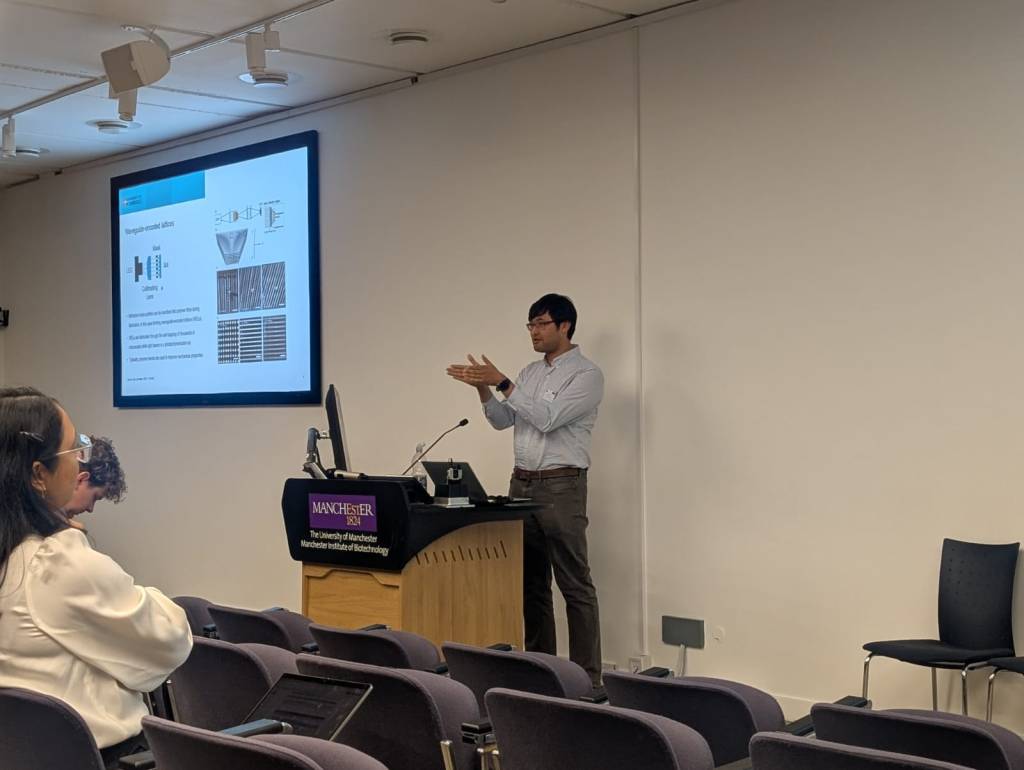
Congratulations to Maggie Nelson, who passed her MPhil viva earlier this month! Maggie’s research explored the effects of polymer composition for luminescent waveguide encoded lattices (LWELs).

Maggie has now begun her studies for a PhD in Materials Science at the Massachusetts Institute of Technology. We wish her the very best of luck!

New group paper published in JACS!

Congratulations to Bea whose work on the use of lyotropic liquid crystals (LLCs) for solar-energy storage has been published in JACS! In this work, we explore the solvent-driven self-assembly of azobenzene photosurfactants (AzoPS) into LLCs for molecular solar thermal energy storage (MOST) applications for the first time. Using a combination of in-situ differential scanning calorimetry (DSC) with small-angle X-ray scattering (SAXS), we were able to unpick the structure-photoswitch-energy storage relationships in these materials, paving the way for accelerated design of similar, amphiphilic systems for future MOST technologies.

Many thanks to all the collaborators who contributed to the success of this project: Zhihang Wang, Martijn Zwijnenburg, Charlotte Edwards-Gayle, Kasper Moth-Poulsen and Nathan Cowieson.

You can read the paper here: https://pubs.acs.org/doi/full/10.1021/jacs.5c09267

PAM Group Participates in MC17

In July, the 17th International conference on materials chemistry (MC17) was held in Edinburgh, with PAM group members contributing in numerous ways.

Firstly, huge congratulations to Rachel for her excellent work as co-chair of the conference. With 150 talks and 400 posters, as well as panel discussions and sponsor exhibits, the conference was a great success, bringing together scientists from the materials chemistry community across the world. Well done Rachel!

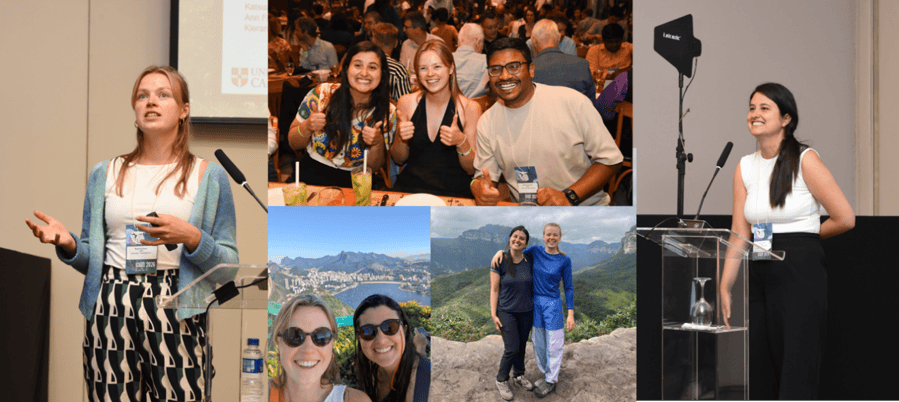
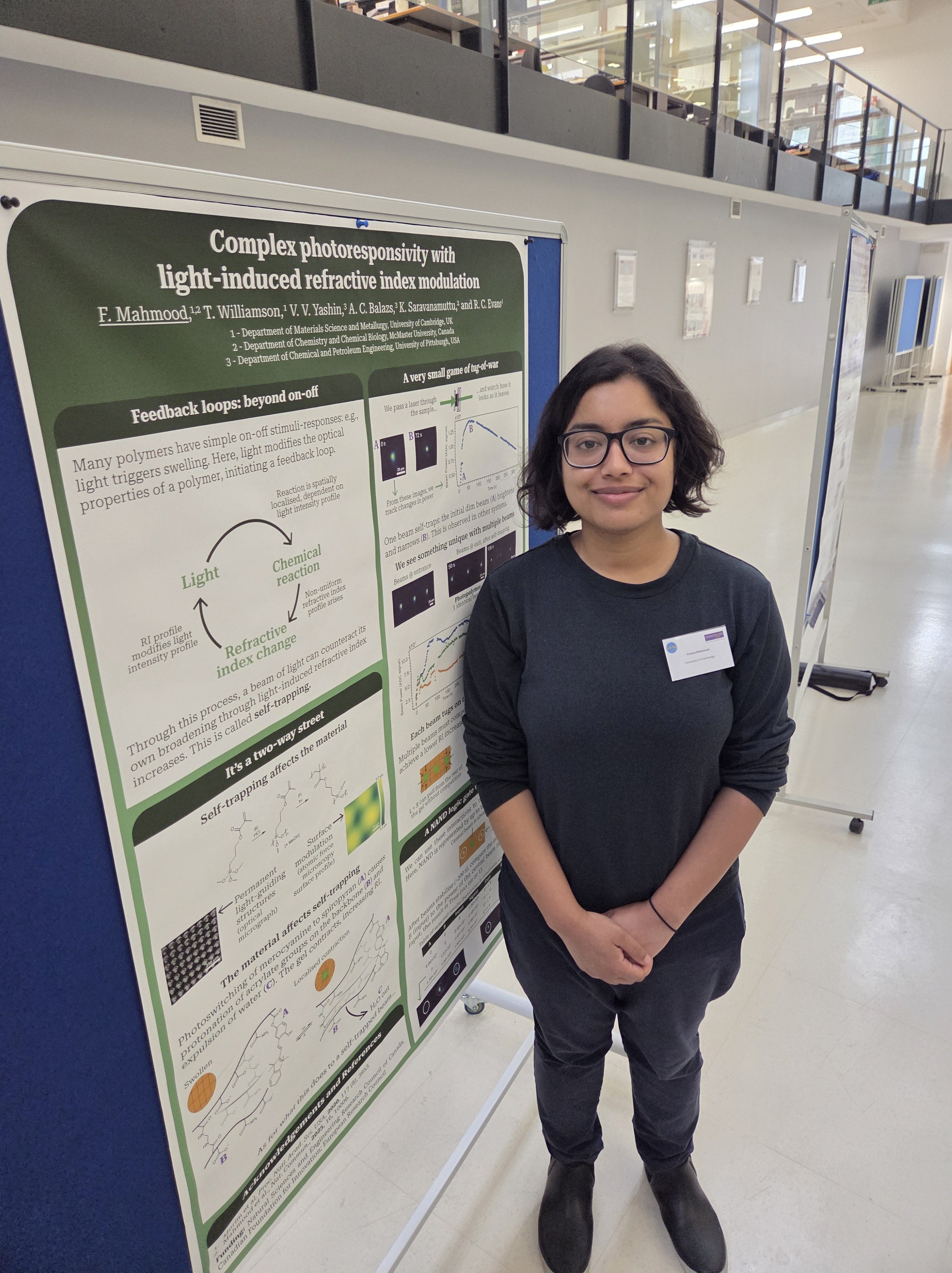
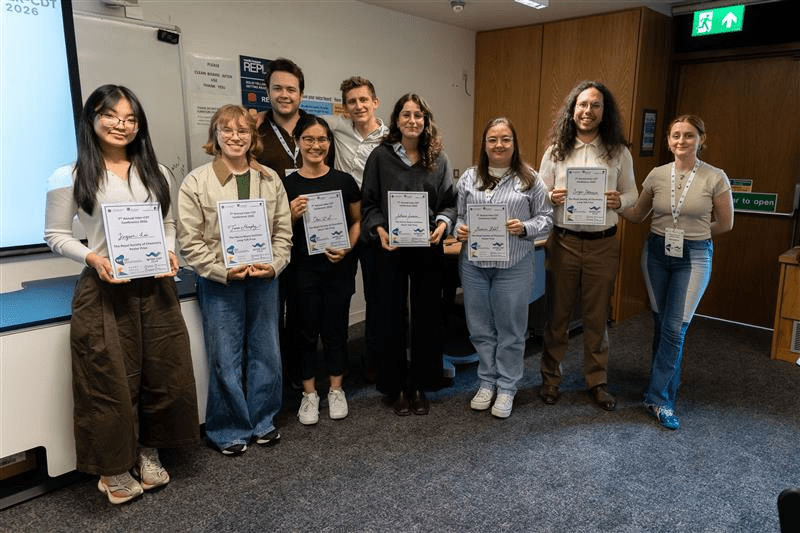
The conference also saw many excellent presentations from group members. Bea, Georgie, and Arad gave talks on their research, while Ziqiong, Arad, Fariha, Maggie, Tom, Jack, and Bea all presented posters.

Special congratulations to Fariha, for receiving a prize for her brilliant poster!